
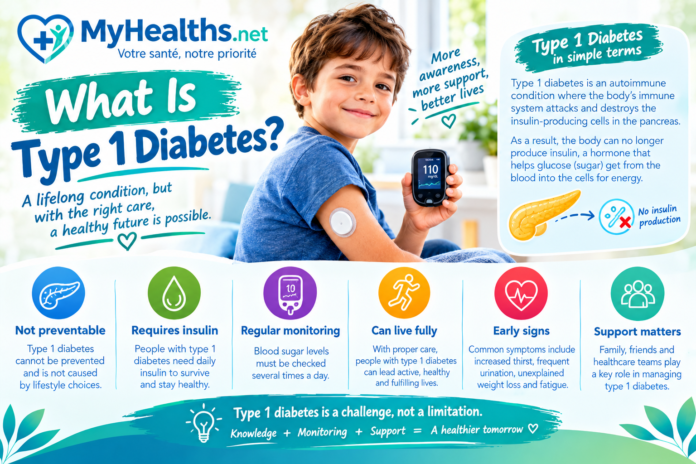
Type 1 diabetes is a chronic autoimmune condition that affects the body’s ability to regulate blood glucose (blood sugar). It occurs when the immune system mistakenly attacks the insulin-producing beta cells in the pancreas. As a result, the body produces little or no insulin.
Insulin is an essential hormone that helps glucose enter cells to provide energy. Without enough insulin, glucose builds up in the bloodstream, potentially causing serious health complications if the condition is not treated.
In this article, you will learn about the causes, symptoms, diagnosis, treatment, and daily management of type 1 diabetes.
What Is Type 1 Diabetes?
Type 1 diabetes is a condition in which the pancreas produces little or no insulin because the body’s immune system destroys the insulin-producing beta cells.
Unlike type 2 diabetes, type 1 diabetes is not primarily caused by insulin resistance or lifestyle factors. It can develop at any age, although it is frequently diagnosed during childhood, adolescence, or early adulthood.
People with type 1 diabetes need insulin treatment to survive. With appropriate medical care, glucose monitoring, and daily management, many people can lead active and fulfilling lives.
What Causes Type 1 Diabetes?
The exact cause of type 1 diabetes is not fully understood. Researchers believe that a combination of genetic susceptibility and environmental factors may contribute to the development of the disease.
1. An autoimmune reaction
The immune system normally protects the body against harmful organisms. In type 1 diabetes, it mistakenly attacks the insulin-producing beta cells in the pancreas.
2. Genetic factors
Some genetic factors increase the likelihood of developing type 1 diabetes. However, having a family history of the condition does not mean that a person will necessarily develop it.
3. Environmental factors
Researchers are studying environmental triggers that may contribute to the autoimmune process. The precise role of these factors remains under investigation.
Important: Type 1 diabetes is not caused by eating too much sugar, and it cannot currently be prevented through a specific diet or exercise routine.
What Are the Symptoms of Type 1 Diabetes?
Symptoms may develop over days or weeks and can become severe if the condition is not diagnosed promptly.
- Increased thirst: Feeling thirsty more often than usual.
- Frequent urination: Needing to urinate frequently, including during the night.
- Unexplained weight loss: Losing weight without trying.
- Extreme hunger: Feeling hungry even after eating.
- Fatigue: Feeling unusually tired or weak.
- Blurred vision: Changes in vision caused by elevated blood glucose.
- Irritability or mood changes: Changes in mood or general well-being.
If you or your child develops these symptoms, seek medical assessment promptly. A healthcare professional can perform the necessary tests to determine whether diabetes is present.
What Is Diabetic Ketoacidosis (DKA)?
Diabetic ketoacidosis, or DKA, is a serious and potentially life-threatening complication of diabetes. It occurs when the body does not have enough insulin and begins breaking down fat for energy, producing acids called ketones.
DKA may be the first sign of previously undiagnosed type 1 diabetes.
Warning signs of DKA
- Nausea and vomiting.
- Abdominal pain.
- Rapid or deep breathing.
- Fruity-smelling breath.
- Severe weakness or dehydration.
- Confusion or unusual drowsiness.
Medical emergency: If these symptoms occur, especially alongside excessive thirst, frequent urination, or suspected diabetes, seek emergency medical care immediately.
How Is Type 1 Diabetes Diagnosed?
Healthcare professionals use blood tests to determine whether a person has diabetes. Depending on the situation, additional tests may help distinguish type 1 diabetes from other forms of diabetes.
Common diagnostic tests
- Blood glucose test: Measures the amount of glucose in the blood.
- HbA1c test: Estimates average blood glucose levels over approximately the previous three months.
- Autoantibody tests: May help identify the autoimmune process associated with type 1 diabetes.
- Ketone testing: May be used when diabetic ketoacidosis is suspected.
Diagnosis and test interpretation should be performed by a qualified healthcare professional. If a person is seriously unwell, emergency assessment should not be delayed while waiting for routine testing.
How Is Type 1 Diabetes Treated?
There is currently no widely available cure for type 1 diabetes. Treatment focuses on replacing insulin, monitoring blood glucose, preventing complications, and supporting overall health.
1. Insulin therapy
People with type 1 diabetes need insulin every day. It may be administered through injections or an insulin pump. The treatment plan is individualized according to glucose levels, meals, physical activity, age, and other medical needs.
2. Blood glucose monitoring
Glucose levels can be monitored using a blood glucose meter or a continuous glucose monitoring (CGM) system. Monitoring helps people understand glucose patterns and make informed treatment decisions with their healthcare team.
3. Healthy eating
A balanced diet can support general health and help with diabetes management. Learning how carbohydrates affect blood glucose is often an important part of diabetes education.
No particular food or diet can replace insulin in type 1 diabetes.
4. Physical activity
Regular physical activity offers important health benefits. However, exercise can change blood glucose levels, so people with type 1 diabetes may need to monitor their glucose and adjust their management plan with professional guidance.
5. Regular medical follow-up
Regular appointments help monitor diabetes management and assess potential complications affecting the eyes, kidneys, nerves, heart, and blood vessels.
Living With Type 1 Diabetes
Managing type 1 diabetes involves daily decisions, but education and appropriate support can make these tasks easier.
- Follow your individualized insulin treatment plan.
- Monitor glucose as recommended by your healthcare team.
- Learn to recognize and treat low blood glucose (hypoglycemia).
- Keep fast-acting glucose available when advised by your healthcare professional.
- Discuss sick-day management and ketone testing with your diabetes team.
- Attend regular medical appointments.
- Seek emotional and practical support when needed.
Never stop prescribed insulin without medical guidance. Insulin deficiency can lead to diabetic ketoacidosis, a medical emergency.
Type 1 Diabetes vs. Type 2 Diabetes
Although both conditions cause elevated blood glucose, their underlying mechanisms and treatments differ.
| Feature | Type 1 Diabetes | Type 2 Diabetes |
|---|---|---|
| Main mechanism | Autoimmune destruction of insulin-producing cells | Insulin resistance and progressive impairment of insulin production |
| Insulin production | Little or no insulin without treatment | Often present, especially in the early stages |
| Typical onset | Can occur at any age | Can occur at any age |
| Treatment | Insulin is essential | May include lifestyle changes, medication, and sometimes insulin |
| Prevention | No established general prevention method | Some cases can be prevented or delayed through risk reduction |
These differences are general. A healthcare professional can determine the type of diabetes and the most appropriate treatment for each individual.
Frequently Asked Questions
Can type 1 diabetes be cured?
There is currently no widely available cure. Insulin therapy remains essential, although research into new treatments continues.
Can adults develop type 1 diabetes?
Yes. Although it is often diagnosed in children and young people, type 1 diabetes can develop at any age.
Is type 1 diabetes caused by eating sugar?
No. Type 1 diabetes is an autoimmune condition and is not caused simply by consuming sugar or by an unhealthy lifestyle.
Can someone with type 1 diabetes exercise?
Yes. Physical activity can be beneficial, but glucose monitoring and individualized adjustments may be needed to reduce the risk of hypoglycemia or other glucose changes.
What should I do if I suspect type 1 diabetes?
Seek prompt medical assessment if you notice symptoms such as excessive thirst, frequent urination, unexplained weight loss, or unusual fatigue. Seek emergency care if symptoms suggest diabetic ketoacidosis.
Conclusion
Type 1 diabetes is a chronic autoimmune condition that requires lifelong insulin treatment. Recognizing its symptoms, obtaining an early diagnosis, and following an individualized treatment plan are essential for reducing the risk of serious complications.
With appropriate medical care, diabetes education, glucose monitoring, and support, people living with type 1 diabetes can manage the condition and maintain a good quality of life.
Medical Sources and Further Reading
- National Institute of Diabetes and Digestive and Kidney Diseases (NIDDK): Type 1 Diabetes
- Centers for Disease Control and Prevention (CDC): About Type 1 Diabetes
- World Health Organization (WHO): Diabetes
Medical disclaimer: This article is intended for educational purposes only. It does not replace professional medical advice, diagnosis, or treatment. Always consult a qualified healthcare professional regarding your health.

