
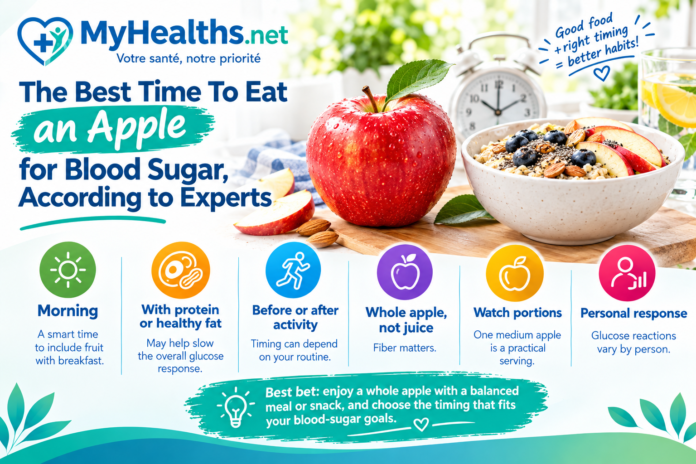
The Best Time To Eat an Apple for Blood Sugar, According to Experts
Apples are one of the most popular fruits in the world—and for good reason. They are naturally sweet, rich in fiber, and easy to add to almost any meal or snack. But if you are trying to manage blood sugar, you may have wondered: Is there actually a best time of day to eat an apple?
According to registered dietitians cited by Health, the answer may be different from what you expect.
There is no universal “perfect time” to eat an apple for blood sugar. Instead, the more useful strategy is to pay attention to what you eat with the apple, the portion you choose, and how your own blood glucose responds. Eating an apple before or with a balanced meal may help moderate the meal’s overall glucose response because apples provide fiber, while pairing the fruit with protein or healthy fat can make the snack more filling and may slow digestion. (HEALTH)
The American Diabetes Association also considers fruit part of a healthy eating pattern for people with diabetes. Fruit contains carbohydrates, but it also provides important nutrients and fiber, and the ADA recommends choosing whole, minimally processed carbohydrate foods such as apples. (Diabetes)
Is Morning the Best Time to Eat an Apple?
Morning can be an excellent time, but it is not necessarily the best time for everyone.
Eating an apple at breakfast can add sweetness, fiber, vitamins, and plant compounds to your meal. Because whole apples contain fiber and have a relatively low glycemic index, they can be incorporated into a breakfast designed to support steadier blood glucose. Health nutrition experts specifically note that apples can help with fullness and can fit well into breakfast. (HEALTH)
The key is what the rest of breakfast looks like.
An apple eaten alongside plain Greek yogurt, eggs, nuts, seeds, or another protein-rich food is generally a more balanced option than eating a large amount of carbohydrate by itself.
For example:
Better-balanced breakfast:
Apple + plain Greek yogurt + walnuts + oatmeal
Rather than:
Less balanced option:
Apple + sweetened cereal + fruit juice
The difference is not simply the apple. It is the overall carbohydrate balance of the meal.
The ADA emphasizes that carbohydrate-containing foods have a significant impact on blood glucose and recommends paying attention to portions and combining carbohydrate foods with quality protein and other nutritious foods. (Diabetes Professionnels)
Eating an Apple Before a Meal May Be a Smart Strategy
One of the most interesting points in the HEALTH article is the recommendation to eat an apple before or with a balanced meal. Registered dietitian Morgan Walker explained to HEALTH that the fiber in an apple can slow the absorption of carbohydrates, potentially helping blunt the rise in blood sugar after eating. (HEALTH)
This does not mean an apple will prevent a blood-sugar spike entirely.
Instead, think of fiber as one part of the bigger picture.
A meal containing vegetables, whole grains, protein, healthy fats, and whole fruit is generally very different from a meal dominated by refined carbohydrates and added sugar.
The ADA similarly recommends choosing whole, minimally processed carbohydrate foods and keeping carbohydrate portions appropriate. (Diabetes)
Why Fiber Makes Apples Interesting for Blood Sugar
One medium apple provides approximately 4 to 5 grams of fiber, according to the dietitians quoted by HEALTH. Apples contain both soluble and insoluble fiber. Their soluble fiber includes pectin, which contributes to the fruit’s ability to slow digestion and increase fullness. (HEALTH)
This matters because fiber is metabolically different from digestible carbohydrate.
The CDC notes that fiber can help with blood sugar management and that high-fiber foods tend to be digested more slowly. (Diabetes)
The ADA also recommends whole fruits as part of a healthy eating pattern and points out that fruit provides carbohydrate along with fiber, vitamins, and minerals. (Diabetes)
Should You Eat the Apple Skin?
Usually, yes.
The skin is an additional source of fiber and plant compounds, so eating a well-washed whole apple rather than peeling it can help you retain more of the fruit’s nutritional value. The nutrition experts interviewed by HEALTH also specifically recommend eating the skin when appropriate. (HEALTH)
The Best Way to Eat an Apple for Blood Sugar
If blood-sugar control is your priority, the food you pair with the apple may matter more than the exact clock time.
A simple strategy is to combine the apple with protein, healthy fat, or both.
Good combinations include:
Apple + peanut or almond butter
This adds protein and healthy fat and can make the snack more satisfying. One of the dietitians featured in HEALTH specifically recommends nut butter as a practical pairing. (HEALTH)
Apple + plain Greek yogurt
Greek yogurt adds protein while the apple contributes fiber and natural sweetness.
Apple + a handful of nuts
Almonds, walnuts, or other unsalted nuts can complement the apple with protein, fat, and additional fiber.
Apple + cheese
For some people, a small serving of cheese with an apple can make a satisfying snack by combining carbohydrate with protein and fat.
These combinations don’t make the apple “sugar-free.” Rather, they create a more balanced eating occasion.
What About Eating an Apple Before Exercise?
An apple can also work as a pre-workout snack, but there is no single rule that works for everyone.
The HEALTH article notes that some people may prefer eating an apple two to three hours before exercise, while others may tolerate apple slices closer to activity. The difference can depend on the type and intensity of the workout and the individual’s tolerance for fiber. (HEALTH)
For example, a person going for a relaxed walk may have no problem eating an apple shortly beforehand.
Someone preparing for an intense workout may find that a high-fiber snack immediately before exercise causes digestive discomfort.
So, when exercise is involved, your personal tolerance matters.
Can You Eat an Apple at Night?
Yes.
There is no good reason to believe that an apple suddenly becomes unhealthy simply because it is evening.
In fact, the HEALTH experts interviewed for the article suggest that an apple can be a nutritious way to satisfy a sweet craving after dinner. Pairing it with a little nut butter or cinnamon can also make the snack more filling. (HEALTH)
The more important question is what else you are eating.
An apple as an evening snack is very different from an apple followed by cookies, sugary cereal, ice cream, and a sweetened drink.
For someone trying to manage blood glucose, the overall eating pattern matters more than an arbitrary “fruit cutoff time.”
Whole Apple vs. Apple Juice: Does It Matter?
Yes—this is one of the most important distinctions.
Whole fruit retains its natural structure and fiber. Fruit juice removes much of the physical structure of the fruit and is much easier to consume quickly.
The ADA recommends whole fruits and identifies apples as a nutritious carbohydrate choice. (Diabetes Professionnels)
The evidence also suggests that whole-fruit consumption and fruit juice may have different relationships with long-term diabetes risk. A large prospective analysis of three U.S. cohorts found that greater consumption of certain whole fruits, including apples, was associated with lower type 2 diabetes risk, whereas higher fruit-juice consumption was associated with a higher risk. (PubMed)
A separate analysis similarly concluded that a healthy diet including whole fruits, rather than relying on fruit juice, may help mitigate type 2 diabetes risk. (PubMed)
This does not mean apple juice is “poison,” nor does it prove that eating apples prevents diabetes. It simply reinforces the nutritional advantage of keeping fruit in its whole form whenever practical.
Does Eating an Apple Prevent a Blood Sugar Spike?
Not necessarily.
This is where health headlines can sometimes become too simplistic.
Apples contain carbohydrate, so they can raise blood glucose. The fact that an apple has fiber and a relatively low glycemic index does not mean it has zero effect on blood sugar.
The ADA explains that fruits are carbohydrate foods and that carbohydrate intake affects blood glucose. (Diabetes)
What fiber can do is help change the speed and overall pattern of digestion compared with foods that contain highly processed or rapidly absorbed carbohydrates.
Your response can also depend on:
- portion size
- variety of apple
- what you eat with it
- physical activity
- medications
- insulin sensitivity
- individual glucose response
That is why two people can eat the same apple and see different glucose results.
How Many Apples Can You Eat?
There is no universal number that applies to everybody.
For many people, one medium apple is a practical serving. But the appropriate portion depends on your total carbohydrate needs and what else is included in the meal.
The ADA’s current diabetes meal-planning guidance recommends keeping carbohydrate foods to an appropriate portion and combining them with quality protein when possible. (Diabetes Professionnels)
For someone with diabetes who counts carbohydrates, the carbohydrate content of an apple should be included in the meal or snack plan.
The important lesson is:
Healthy food can still contribute carbohydrates.
Portion size remains important even when the food itself is nutritious.
Are Apples Good for People With Diabetes?
Yes.
The American Diabetes Association lists apples among healthy fruit choices and explicitly states that people with diabetes can eat fruit. Fruit contributes carbohydrate, but it also provides fiber, vitamins, and minerals. (Diabetes)
In fact, observational research has repeatedly found that greater whole-fruit consumption is associated with favorable outcomes related to type 2 diabetes risk.
In one large prospective study involving more than 187,000 participants across three cohorts, apples and pears were among the fruits associated with a lower incidence of type 2 diabetes. (PubMed)
A meta-analysis of prospective cohort studies also found an inverse association between apple and pear consumption and type 2 diabetes risk. (PubMed)
These findings are associations, not proof of cause and effect. People who eat more fruit may also differ in many other aspects of diet and lifestyle.
Still, the overall evidence supports the idea that whole fruit can be part of a healthy dietary pattern.
What Is the Best Time to Eat an Apple for Blood Sugar?
After reviewing the expert guidance and the broader evidence, the most accurate answer is:
There is no single best time for everyone.
However, several situations can make an apple especially useful.
Morning
A whole apple can be a nutritious addition to breakfast, particularly when combined with protein and healthy fats. (HEALTH)
Before or with a meal
Eating an apple with a balanced meal may help slow the overall absorption of carbohydrate because of its fiber content. (HEALTH)
Mid-afternoon
An apple can be a convenient snack when paired with nuts, yogurt, or nut butter.
Before exercise
It may provide carbohydrate for energy, although people who are sensitive to fiber may prefer more time between eating and intense exercise. (HEALTH)
After dinner
A whole apple can satisfy a craving for something sweet without relying on an ultra-processed dessert. (HEALTH)
Whenever you will actually eat it
Perhaps the most practical answer from the HEALTH article is that the best time is simply the time that fits your routine and makes it easy for you to maintain a healthy eating pattern. (HEALTH)
A Simple Apple Strategy for More Stable Blood Sugar
Instead of worrying about finding a perfect hour, use these simple principles:
Choose a whole apple.
Keep the skin when practical and wash the fruit well.
Pay attention to the portion.
A medium apple is a practical starting point for many people.
Pair it with protein or healthy fat.
Try Greek yogurt, nuts, seeds, peanut butter, or almond butter.
Avoid turning it into a high-sugar dessert.
Adding large amounts of caramel, sweetened sauces, or sugary cereal can dramatically change the nutritional profile.
Pay attention to your own glucose response.
For people who monitor blood glucose, checking how a particular portion affects them can provide useful personal information. The ADA notes that monitoring can help reveal how food and other factors affect blood glucose. (Diabetes)
The Bottom Line
So, what is the best time to eat an apple for blood sugar?
There isn’t a scientifically established “magic hour.”
For many people, the smartest approach is to eat a whole apple as part of a balanced meal or snack, particularly when paired with protein or healthy fat. Morning is perfectly reasonable, eating an apple before or with a meal may be helpful, and an apple can also fit into an afternoon snack or evening routine. (HEALTH)
The bigger picture matters much more than the clock.
Apples provide fiber, vitamins, antioxidants, and naturally occurring carbohydrates, and health organizations such as the American Diabetes Association recognize whole fruit as part of a healthy eating pattern for people with diabetes. (Diabetes)
MyHealths.net Takeaway
Don’t search for a perfect time—build your apple into a balanced eating pattern.
🍎 Whole apple > apple juice
🥜 Apple + protein/healthy fat = a more balanced snack
⏰ Morning, afternoon, or evening can all work
📏 Portion size still matters
📊 Your personal blood-glucose response matters most
The goal is not to fear fruit. It’s to understand how, when, and with what you eat it.
This article is for educational purposes and is not a substitute for individualized medical advice. People with diabetes, particularly those using insulin or glucose-lowering medications, should discuss major dietary changes with their healthcare professional.
Sources
This article was informed by the HEALTH article you provided, which was updated October 5, 2026 and includes comments from registered dietitians and nutrition experts. (HEALTH) It also draws on American Diabetes Association nutrition guidance and peer-reviewed research on whole-fruit consumption and diabetes risk. (Diabetes)

