
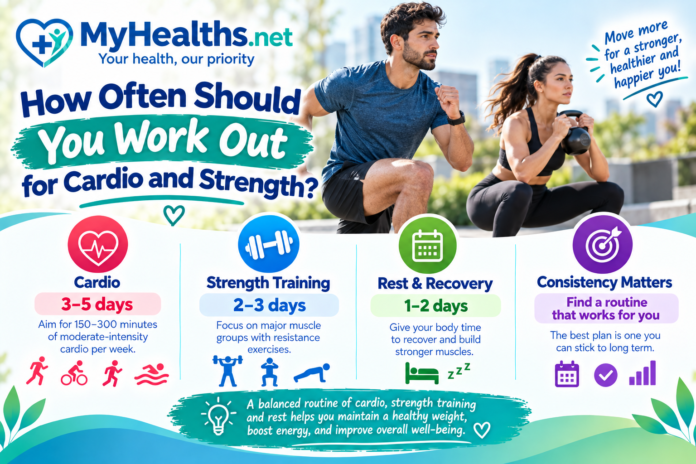
How Often Should You Work Out for Cardio and Strength?
Finding the right balance between cardio and strength training is essential for maintaining good health, improving fitness, and building a stronger body. But how often should you exercise each week to get the best results?
The answer depends on your fitness level, health goals, and daily routine. For most adults, health authorities recommend at least 150 minutes of moderate-intensity cardio per week, along with muscle-strengthening exercises on at least two days per week.
The good news is that you do not need to spend hours at the gym every day. With a consistent and well-balanced workout routine, you can improve your cardiovascular health, strengthen your muscles, and support your overall well-being.
How Often Should You Do Cardio?
Cardiovascular exercise, commonly called cardio, increases your heart rate and helps your heart and lungs work more efficiently. Popular examples include brisk walking, cycling, swimming, jogging, and dancing.
According to the Centers for Disease Control and Prevention (CDC), adults should aim for one of the following weekly targets:
- 150 minutes of moderate-intensity cardio, such as brisk walking or casual cycling.
- 75 minutes of vigorous-intensity cardio, such as running or fast cycling.
- A combination of moderate and vigorous activities that provides equivalent benefits.
For additional health benefits, adults can gradually increase their moderate-intensity activity to 300 minutes per week.
You can divide your cardio sessions throughout the week. For example, walking briskly for 30 minutes five days a week can help you reach the recommended minimum.
Benefits of Regular Cardio
Regular cardiovascular exercise can help:
- Improve heart and lung health.
- Support healthy blood pressure.
- Improve endurance and stamina.
- Help manage body weight.
- Reduce the risk of several chronic diseases.
- Support mood and overall mental well-being.
You do not have to run or perform intense workouts to benefit from cardio. Walking, swimming, cycling, and other activities that suit your abilities can all contribute to your weekly target.
How Often Should You Do Strength Training?
Strength training helps build and maintain muscle, improve physical function, and support bone health. It can also make everyday activities, such as carrying groceries or climbing stairs, easier.
For most adults, the recommended minimum is at least two days of muscle-strengthening exercise per week.
Your workouts should target all the major muscle groups, including:
- Legs and hips.
- Back.
- Chest.
- Shoulders.
- Arms.
- Abdominal muscles.
You can build strength using free weights, resistance bands, weight machines, or bodyweight exercises such as squats, push-ups, and lunges.
How Long Should a Strength Workout Last?
There is no single ideal duration for every strength workout. Many people can complete an effective session in approximately 20 to 45 minutes, depending on their goals, experience, and exercise selection.
Beginners should start with manageable sessions and focus on proper technique before increasing the weight or difficulty.
Allow sufficient recovery between demanding sessions that work the same muscle groups. Training more often is not necessarily better if your body does not have enough time to recover.
Should You Do Cardio or Strength Training First?
The best order depends on your primary fitness goal.
If your goal is cardiovascular endurance: Start with cardio when improving endurance is your main priority.
If your goal is building muscle: Begin with strength training so that you can perform your resistance exercises with good technique and sufficient energy.
If your goal is general health: Either order can work. You can also perform cardio and strength training on separate days to make your routine easier to manage.
Combining both types of exercise can help you develop a balanced fitness routine without focusing exclusively on one aspect of physical health.
A Simple Weekly Cardio and Strength Workout Plan
If you are looking for a practical starting point, the following schedule combines moderate cardio with two strength-training sessions.
Monday: Cardio
Walk briskly, cycle, or swim for 30 minutes.
Tuesday: Strength Training
Work your major muscle groups using exercises such as squats, push-ups, rows, and abdominal exercises.
Wednesday: Cardio
Complete another 30-minute moderate-intensity cardio session.
Thursday: Strength Training
Perform a full-body strength workout, adjusting the intensity to your fitness level.
Friday: Cardio
Walk briskly or cycle for 30 minutes.
Saturday: Cardio
Enjoy 30 minutes of your preferred aerobic activity.
Sunday: Cardio or Active Recovery
Complete 30 minutes of easy-to-moderate movement if you feel comfortable, or take a rest day if you need recovery.
This schedule provides 150 minutes of cardio and two strength-training days. You can move sessions around to suit your work schedule and recovery needs.
How Often Should Beginners Work Out?
If you are new to exercise or have been inactive for a long time, starting gradually is important.
You do not need to reach the recommended weekly target immediately. Begin with short walks, light resistance exercises, or other activities you can perform comfortably.
Consider these practical tips:
- Start with 10–15 minutes of activity if a longer session feels difficult.
- Increase your exercise time gradually as your fitness improves.
- Choose activities you enjoy so that you are more likely to continue.
- Include rest or lighter-activity days when needed.
- Pay attention to persistent pain, unusual fatigue, or other warning signs.
Even small amounts of physical activity are beneficial. Building a sustainable routine is more important than attempting an intense workout plan that you cannot maintain.
Can You Do Cardio and Strength Training on the Same Day?
Yes. Many adults can safely combine cardio and strength training on the same day.
For example, you could complete 20 minutes of brisk walking followed by 25 minutes of strength exercises. You can also separate the two sessions by several hours if that works better for you.
If you are training for a specific performance goal, consider how the intensity and order of your workouts affect your energy and recovery.
Remember that exercise recommendations are weekly targets, not a requirement to complete every activity in one session.
How Much Rest Do You Need Between Workouts?
Recovery is an important part of a successful fitness routine. Your muscles need time to adapt to resistance training, and your body benefits from a sensible balance between activity and rest.
To support recovery:
- Avoid repeatedly training the same muscles hard on consecutive days when you are not adequately recovered.
- Get enough sleep.
- Eat a balanced diet that provides adequate energy and protein.
- Drink water before, during, and after exercise as appropriate.
- Reduce workout intensity if you feel unusually tired or experience persistent soreness.
Rest does not always mean complete inactivity. Gentle walking and comfortable mobility exercises can be suitable on recovery days.
Common Workout Mistakes to Avoid
Even motivated people can make mistakes that interfere with progress. Avoid these common problems:
Doing too much too soon: Increasing exercise volume or intensity too quickly can increase the risk of injury.
Ignoring strength training: Cardio is valuable, but a balanced routine should also include muscle-strengthening activities.
Skipping recovery: Exercising hard every day without adequate recovery may lead to persistent fatigue and reduced performance.
Following an unrealistic schedule: A manageable routine that fits your lifestyle is often more sustainable than a demanding plan.
Ignoring pain or warning signs: Stop exercising and seek appropriate medical advice if you experience concerning symptoms, such as chest pain, fainting, or unusual shortness of breath.
When Should You Speak With a Healthcare Professional?
Most adults can benefit from regular moderate physical activity. However, if you have a chronic health condition, significant mobility limitations, or concerns about your ability to exercise safely, consult a healthcare professional about an appropriate plan.
If you have been inactive and want to begin vigorous exercise, professional guidance may also be helpful, particularly if you have existing health concerns.
Adjust your workout plan to your age, current fitness level, and individual needs.
Final Thoughts
For most adults, a good starting point is 150 minutes of moderate-intensity cardio each week and strength training at least two days per week. You can divide these sessions across the week, combine cardio and strength on the same day, or schedule them separately.
The most effective workout routine is one that supports your goals, allows adequate recovery, and fits into your everyday life.
Start at a level that feels manageable, increase your activity gradually, and focus on consistency rather than perfection. Over time, a balanced approach to cardio and strength training can help you build healthier habits and improve your overall fitness.
Frequently Asked Questions
Is 30 minutes of cardio five days a week enough?
Yes. For most adults, 30 minutes of moderate-intensity cardio five days a week adds up to 150 minutes, meeting the recommended minimum for aerobic activity.
Is strength training twice a week enough?
Two days per week is the recommended minimum for adults to work all major muscle groups. Your ideal frequency may vary depending on your goals, training experience, and recovery.
Can I lose weight with cardio and strength training?
Both types of exercise can support weight management. Combining regular physical activity with a balanced eating pattern can help, although individual results vary.
Is walking considered cardio?
Yes. Brisk walking counts as moderate-intensity aerobic activity when it raises your breathing and heart rate sufficiently. A leisurely walk can also contribute to your daily movement.
Should I exercise every day?
You can be physically active every day, but not every day needs to involve an intense workout. Balance more demanding sessions with lighter activity and adequate recovery.
Medical sources
-
World Health Organization — Physical activity recommendations. Guidance on weekly aerobic activity and muscle strengthening.
Organisation mondiale de la santé -
Centers for Disease Control and Prevention — Adult Activity: An Overview. Recommendations for aerobic exercise and strength training.
CDC -
National Health Service — How to improve strength and flexibility. Practical guidance on strengthening exercises and physical activity.
nhs.uk
Editorial note: This article is for general educational purposes and is not a substitute for personalized medical advice. Review the content medically before publication.

