
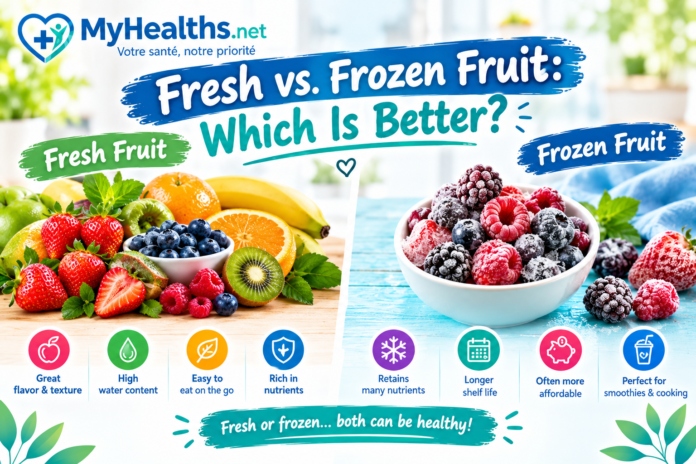
Fresh vs. Frozen Fruit: Which Is Better?
Fresh vs. Frozen Fruit: Which Is Better for Your Health?
Fresh fruit is often considered the healthiest option, but frozen fruit can be just as nutritious. Both provide essential vitamins, minerals, fiber, and antioxidants that support overall health. The main differences come down to freshness, storage, convenience, price, and how the fruit is processed.
So, which is better: fresh or frozen fruit? The answer may surprise you.
1. Are Fresh Fruits Healthier Than Frozen Fruits?
Fresh fruits are an excellent source of essential nutrients. Apples, oranges, strawberries, blueberries, and bananas provide vitamins, minerals, fiber, and beneficial plant compounds.
However, the nutritional value of fresh fruit can change after harvesting. Exposure to air, light, heat, and prolonged storage may gradually reduce certain vitamins, particularly vitamin C.
Frozen fruit is usually harvested when ripe and quickly frozen to preserve its quality. Although some nutrients may be lost during preparation, freezing helps retain many vitamins, minerals, and other beneficial compounds.
According to Harvard Health Publishing, fresh and frozen produce can both contribute to a healthy diet, making either option a valuable choice.
The bottom line: Fresh fruit eaten soon after harvesting can be highly nutritious, but frozen fruit can be an excellent alternative when fresh fruit is unavailable, expensive, or out of season.
2. Nutritional Differences Between Fresh and Frozen Fruit
The nutritional differences depend on the type of fruit, its ripeness at harvest, how it is processed, and how long it is stored.
Vitamins and minerals
Both fresh and frozen fruits provide important nutrients, including:
- Vitamin C: Found in strawberries, oranges, kiwi, and other fruits. It supports normal immune function and collagen production.
- Vitamin A precursors: Present in fruits such as mangoes and cantaloupe, supporting normal vision and immune function.
- Potassium: Found in bananas, oranges, and other fruits, helping support normal muscle function and fluid balance.
- Folate: Present in fruits such as oranges and avocados, contributing to normal cell growth and development.
Some vitamin C may be lost during processing and storage. However, frozen fruit can retain substantial amounts of nutrients, especially when it is processed and stored properly.
Fiber and antioxidants
Fresh and frozen whole fruits both provide dietary fiber, which supports digestion and helps maintain regular bowel movements.
Many fruits also contain antioxidants and other plant compounds. Berries, for example, contain anthocyanins, which contribute to their color and have been studied for their potential health benefits.
Freezing does not automatically make fruit less nutritious. In some circumstances, frozen fruit may retain more of certain nutrients than fresh fruit that has been stored for a long time.
3. Benefits of Eating Fresh Fruit
Fresh fruit offers several advantages that make it a great part of a balanced diet.
Better texture and flavor
Many people prefer fresh fruit because of its natural texture, aroma, and taste. Fresh apples are crisp, grapes are firm, and ripe peaches have a soft, juicy texture.
Convenient for everyday snacks
Fresh fruit can be eaten as a snack with little preparation. An apple, banana, orange, or pear can easily be taken to work, school, or while traveling.
High water content
Many fresh fruits contain substantial amounts of water, which contributes to daily hydration. Water-rich fruits such as watermelon, oranges, and strawberries can be refreshing choices, especially in warm weather.
Easy to include in meals
Fresh fruit can be added to breakfast, salads, yogurt, or healthy desserts. Eating a variety of fruits also helps provide a broader range of nutrients.
One important tip: Wash fresh fruit under running water before eating or cutting it, even when the peel will not be consumed.
4. Benefits of Eating Frozen Fruit
Frozen fruit is more than a convenient substitute for fresh produce. It has several practical and nutritional advantages.
Nutrients can be well preserved
Fruit is often frozen shortly after harvesting, helping preserve many of its nutrients. Frozen berries, mangoes, peaches, and other fruits can therefore be nutritious additions to everyday meals.
Longer shelf life
One of the biggest advantages of frozen fruit is that it lasts much longer than most fresh fruit when stored correctly in a freezer.
This can help reduce food waste, especially when you buy fruit in bulk or cannot consume fresh produce quickly.
Available throughout the year
Some fruits are seasonal or difficult to find fresh at certain times of the year. Frozen fruit makes it easier to enjoy a variety of fruits regardless of the season.
Convenient for cooking and smoothies
Frozen fruit is usually washed, peeled, or cut before packaging, depending on the product. This makes it particularly convenient for preparing smoothies, oatmeal, yogurt bowls, and desserts.
Potentially more affordable
Frozen fruit may be less expensive than fresh fruit, particularly when the fruit is out of season. Comparing the price per usable portion can help you make a more economical choice.
5. Is Frozen Fruit Good for Weight Management?
Yes. Frozen fruit can be part of a balanced eating plan for people who want to manage their weight.
Both fresh and frozen whole fruits provide fiber and water, which can help make meals and snacks more satisfying. Their natural sweetness can also help replace some desserts and snacks with added sugars.
For example, you could add frozen berries to plain yogurt or mix frozen mango into oatmeal.
However, portion sizes and preparation methods matter. Fruit smoothies can become high in calories if you add large quantities of honey, sweetened yogurt, syrups, or other calorie-dense ingredients.
For a simple option, choose whole fresh or frozen fruit without added sugar.
6. Is Frozen Fruit Suitable for People With Diabetes?
Fresh and frozen whole fruits can both fit into a balanced eating plan for many people with diabetes.
Fruit contains naturally occurring carbohydrates, including sugars, as well as fiber, vitamins, minerals, and beneficial plant compounds.
When choosing frozen fruit, look for products containing only fruit, without added sugar or sweetened syrup. Check the nutrition label and consider the carbohydrate content of your portion.
Whole fruit is generally preferable to fruit juice because it retains its fiber and is often more filling.
People with diabetes should consider their individual meal plan, portion sizes, medications, and blood glucose responses when deciding how much fruit to eat.
7. How to Choose Healthy Frozen Fruit
Not all frozen fruit products are the same. Some contain added sugars, syrups, or other ingredients that may not be necessary.
Use these simple tips when shopping:
- Read the ingredient list. Ideally, the only ingredient should be the fruit itself.
- Avoid added sugars. Choose unsweetened frozen fruit whenever possible.
- Check the packaging. Avoid packages that are torn or visibly damaged.
- Look for signs of thawing and refreezing. Large clumps of fruit or excessive ice may indicate temperature fluctuations, although these signs are not conclusive.
- Store it correctly. Keep frozen fruit in the freezer and follow the package instructions.
For fresh fruit, choose produce that is appropriately ripe, free from obvious spoilage, and stored according to its needs.
8. Can You Eat Frozen Fruit Without Thawing It?
Yes, many frozen fruits can be eaten while still frozen, depending on the fruit and your preferences. They can also be added directly to smoothies, oatmeal, or recipes.
If you prefer a softer texture, thaw the fruit in the refrigerator or according to the package instructions.
However, freezing does not reliably kill all harmful microorganisms. Some frozen berries and other fruits may carry pathogens. Follow package instructions, especially for products intended to be cooked, and take extra care when serving people at increased risk of foodborne illness.
Washing or thawing fruit does not necessarily eliminate all harmful microorganisms.
9. Fresh vs. Frozen Fruit: Which Should You Choose?
The best choice depends on your needs, budget, and how you plan to use the fruit.
| Factor | Fresh Fruit | Frozen Fruit |
|---|---|---|
| Nutritional value | Excellent, especially when recently harvested | Often retains many important nutrients |
| Texture | Usually crisp or juicy | Often softer after thawing |
| Shelf life | Generally shorter | Generally longer when stored properly |
| Convenience | Ready to eat after washing | Often prewashed or prepared |
| Availability | Depends on season and location | Often available year-round |
| Cost | Varies by season and type | May be more economical |
| Best uses | Snacks, salads, and fresh desserts | Smoothies, oatmeal, baking, and cooking |
There is no single winner for every situation. Both fresh and frozen fruit can be nutritious choices.
10. Tips for Including More Fruit in Your Diet
Whether you prefer fresh or frozen fruit, eating a variety of fruits regularly is a practical way to improve your overall diet.
Here are a few easy ideas:
- Add fresh berries or banana slices to breakfast.
- Keep washed apples, pears, or oranges available for snacks.
- Add frozen berries to plain yogurt or oatmeal.
- Blend frozen mango or strawberries into a smoothie without added sugar.
- Use fruit to add natural sweetness to homemade recipes.
- Choose different colors and varieties to enjoy a wider range of nutrients.
- Freeze ripe fruit at home before it spoils, using suitable food-safe containers.
The goal is not to choose one form exclusively, but to find affordable and convenient ways to eat fruit regularly.
Frequently Asked Questions
Is frozen fruit as healthy as fresh fruit?
Frozen fruit can be just as nutritious as fresh fruit in many circumstances. The nutritional differences depend on the fruit, its ripeness, storage conditions, and processing methods.
Does freezing fruit destroy vitamins?
Freezing does not destroy all vitamins. Some nutrients may be lost during preparation or storage, but many vitamins, minerals, and plant compounds remain.
Which is better for smoothies: fresh or frozen fruit?
Both work well. Frozen fruit creates a thick, cold texture without requiring as much ice. Choose unsweetened fruit and limit added sugars.
Does frozen fruit contain added sugar?
Plain frozen fruit generally contains no added sugar, but some packaged products are sweetened. Check the ingredient list and nutrition label before buying.
Is frozen fruit better for your budget?
It can be, especially when fresh fruit is out of season or when frozen fruit helps prevent waste. Prices vary by fruit, brand, location, and season.
Should I eat more fresh or frozen fruit?
Choose whichever option helps you eat a wider variety of fruits regularly. Combining both can offer flexibility, convenience, and good nutritional value.
Final Verdict: Fresh vs. Frozen Fruit
Fresh and frozen fruits can both be excellent components of a healthy diet. Fresh fruit is ideal when it is ripe, available, and consumed before it deteriorates. Frozen fruit offers convenience, a longer shelf life, and access to many nutritious fruits throughout the year.
For most people, the smartest approach is to enjoy both. Choose whole fruit, vary the types you eat, limit products with added sugar, and store fruit properly.
The most important thing is not whether your fruit is fresh or frozen, but making fruit a regular part of a balanced diet.
Sources and Further Reading
- Harvard Health Publishing: Fresh or Frozen Produce? The Health Benefit Is All in the Mix.
https://www.health.harvard.edu/healthy-aging-and-longevity/fresh-or-frozen-produce-the-health-benefit-is-all-in-the-mix - Harvard T.H. Chan School of Public Health: Common Questions About Fruits and Vegetables.
https://nutritionsource.hsph.harvard.edu/common-questions-fruits-vegetables/ - U.S. Department of Agriculture (USDA): Freezing and Food Safety.
https://www.fsis.usda.gov/food-safety/safe-food-handling-and-preparation/food-safety-basics/freezing-and-food-safety
Medical disclaimer: This article is for general educational purposes only and is not a substitute for individualized medical or nutritional advice from a qualified healthcare professional.

