
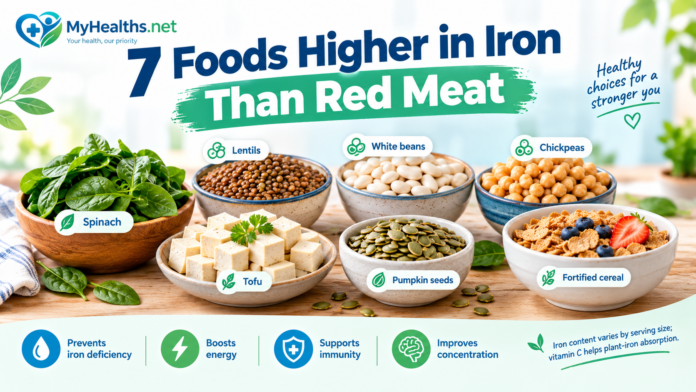
7 Foods Higher in Iron Than Red Meat
Iron is an essential mineral that helps your body produce hemoglobin, the protein responsible for carrying oxygen in your blood. Although red meat is a well-known source of iron, several plant-based foods and fortified products can provide comparable or even higher amounts per serving.
From lentils and white beans to pumpkin seeds and fortified cereals, discover seven iron-rich foods to include in a balanced diet, along with practical tips to help your body absorb iron more effectively.
Why Does Your Body Need Iron?
Iron is necessary for producing hemoglobin and myoglobin, proteins that help transport and store oxygen. It also supports normal growth, development and several cellular functions.
Not getting enough iron over time can contribute to iron deficiency and, in some cases, iron-deficiency anemia. Symptoms may include fatigue, weakness and difficulty concentrating, although a medical evaluation is needed to determine the cause.
There are two main forms of dietary iron:
- Heme iron: Found in meat, poultry and seafood. The body generally absorbs it more efficiently.
- Non-heme iron: Found in beans, lentils, vegetables, seeds and fortified foods. Its absorption depends more on the overall meal.
7 Foods Higher in Iron Than Red Meat
The following foods can help you increase your iron intake. Actual iron content varies by variety, brand, preparation and serving size, so not every food listed necessarily contains more iron than every type of red meat.
1. Iron-Fortified Breakfast Cereals
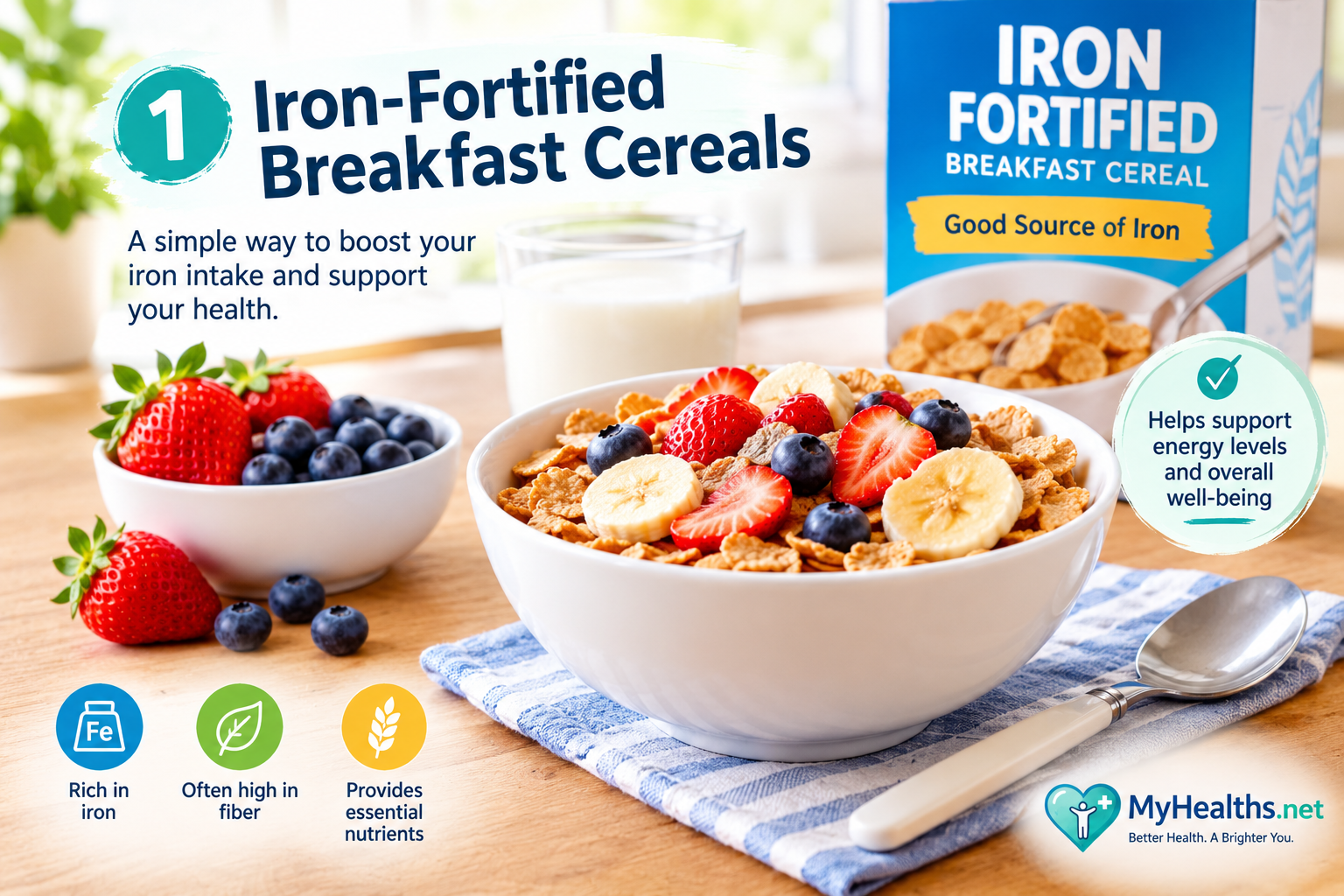
Iron-fortified breakfast cereals can be among the most concentrated dietary sources of iron. Depending on the product, one serving may contain more iron than a typical serving of beef.
Check the nutrition label because iron levels differ considerably between brands. Choose options that fit your overall nutritional needs, including your preferences for added sugar, fiber and whole grains.
How to enjoy it: Serve fortified cereal with strawberries, kiwi or orange slices. These fruits provide vitamin C, which helps the body absorb non-heme iron.
2. White Beans
White beans are a valuable source of plant-based iron. According to the U.S. National Institutes of Health (NIH), one cup of canned white beans contains approximately 8 milligrams of iron.
They also provide protein and fiber, making them a useful addition to meals designed to support overall health.
How to enjoy them: Add white beans to soups, vegetable stews, salads or tomato-based dishes. Pair them with bell peppers or tomatoes to increase vitamin C intake.
3. Lentils
Lentils are rich in plant protein, fiber and several important minerals. A half-cup serving of boiled lentils provides approximately 3 milligrams of iron, according to the NIH.
They are especially useful for people following vegetarian or vegan diets and can be incorporated into a wide variety of everyday meals.
How to enjoy them: Prepare lentil soup, lentil salads or a vegetable stew. Adding lemon juice or tomatoes can help improve non-heme iron absorption.
4. Tofu
Tofu, made from soybeans, is a useful source of protein and iron. The amount depends on the product and how it is prepared. The NIH lists approximately 3 milligrams of iron in half a cup of firm tofu in its food comparison table.
Tofu is also versatile: it absorbs the flavors of marinades, sauces and spices, making it easy to include in different cuisines.
How to enjoy it: Stir-fry tofu with broccoli and bell peppers, bake it with herbs or add it to vegetable curry.
5. Spinach
Spinach contains iron, folate and other nutrients that contribute to a balanced diet. A half-cup serving of boiled spinach provides approximately 3 milligrams of iron, according to the NIH.
However, spinach also contains compounds that can reduce iron absorption. Its iron content should therefore not be interpreted as equivalent to the amount of iron your body actually absorbs.
How to enjoy it: Add spinach to omelets, soups, salads or vegetable dishes. Combine it with foods rich in vitamin C to help your body absorb its non-heme iron.
6. Chickpeas
Chickpeas are a practical and nutritious way to increase iron intake. A half-cup serving of boiled chickpeas provides approximately 2 milligrams of iron, according to the NIH.
They also supply protein and fiber, which can support a satisfying, balanced meal.
How to enjoy them: Use chickpeas in hummus, salads, soups and Moroccan-style vegetable tagines. Add lemon juice or fresh tomatoes for vitamin C.
7. Pumpkin Seeds
Pumpkin seeds are nutrient-dense seeds that contain iron, protein, magnesium and unsaturated fats. Their iron content varies depending on the product and serving size.
Because seeds are concentrated foods, they can be a convenient way to add nutrients to meals and snacks. However, their iron is non-heme iron, which is generally less readily absorbed than heme iron.
How to enjoy them: Sprinkle pumpkin seeds over salads, oatmeal or yogurt, or enjoy a small handful as a snack.
Iron Content: How Do These Foods Compare?
The table below uses approximate values published in the NIH Office of Dietary Supplements’ iron fact sheet. Values refer to the specified portions and should not be treated as exact measurements for every product.
| Food | Serving size | Approximate iron |
|---|---|---|
| Iron-fortified breakfast cereal | 1 serving, fortified to 100% of the Daily Value | 18 mg |
| White beans, canned | 1 cup | 8 mg |
| Lentils, boiled | 1/2 cup | 3 mg |
| Spinach, boiled | 1/2 cup | 3 mg |
| Firm tofu | 1/2 cup | 3 mg |
| Chickpeas, boiled | 1/2 cup | 2 mg |
| Beef, cooked | 3 ounces (about 85 g) | About 2 mg |
Note: These are reference values, not a universal ranking. The NIH table does not establish a standardized value for every pumpkin seed product. The fortified cereal figure applies specifically to a serving providing 100% of the Daily Value. Food composition and absorption differ between products and individuals.
How to Improve Iron Absorption Naturally
Eating iron-rich foods is important, but the amount your body absorbs also matters. A few practical habits can help:
- Combine iron with vitamin C: Eat beans, lentils or leafy vegetables with citrus fruit, tomatoes, strawberries or bell peppers.
- Eat a varied diet: Include legumes, seeds, leafy vegetables and appropriately fortified foods.
- Be mindful of tea and coffee: Compounds in these drinks can reduce the absorption of non-heme iron when consumed with meals. Consider drinking them between meals if iron intake is a concern.
- Check food labels: Fortified cereals and grain products can differ significantly in iron content.
- Seek medical advice when necessary: Persistent fatigue or suspected iron deficiency may require blood tests and treatment rather than dietary changes alone.
Who May Need to Pay More Attention to Iron?
Some people have higher iron requirements or a greater risk of iron deficiency. These include menstruating women, pregnant people, growing children and adolescents, frequent blood donors, and people with certain digestive conditions or ongoing blood loss.
People following vegetarian or vegan diets can meet their iron needs through careful food choices, although non-heme iron is generally less readily absorbed. Individual needs vary according to age, sex, pregnancy status and other factors.
Do not start high-dose iron supplements without professional advice. Excess iron can be harmful, and fatigue or weakness can have causes other than iron deficiency.
Conclusion
Red meat is one source of dietary iron, but it is not the only option. Fortified breakfast cereals, white beans, lentils, tofu, spinach, chickpeas and pumpkin seeds can all contribute to your iron intake.
For a balanced approach, vary your food choices, combine plant-based iron sources with vitamin C, and pay attention to portion sizes and nutrition labels. If you suspect iron deficiency or anemia, consult a healthcare professional for appropriate testing and advice.
Scientific Sources and References
- National Institutes of Health, Office of Dietary Supplements. Iron: Fact Sheet for Health Professionals. Read the scientific fact sheet.
- National Institutes of Health, Office of Dietary Supplements. Iron: Fact Sheet for Consumers. Read the consumer guide.
- Harvard T.H. Chan School of Public Health. The Nutrition Source: Iron. Read the nutrition overview.
- MedlinePlus, U.S. National Library of Medicine. Iron in diet. Read the medical reference.
Medical disclaimer: This article is for educational purposes only and is not a substitute for individualized medical advice, diagnosis or treatment.

