
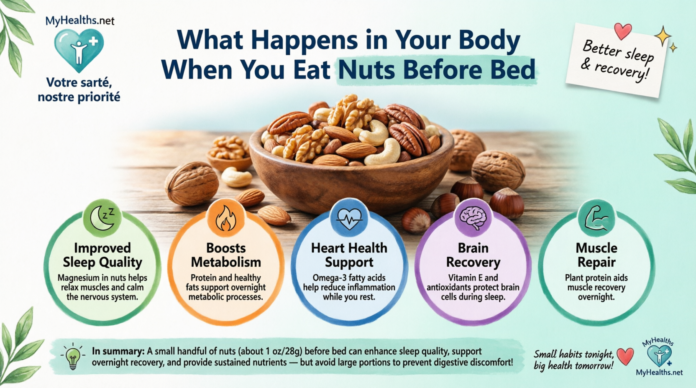
What Happens in Your Body When You Eat Nuts Before Bed
Discover the science-backed benefits of adding a small handful of nuts to your bedtime routine — from better sleep to stabilized blood sugar.

Tossing and turning at night? Before you reach for a sleep aid or scroll endlessly on your phone, you might want to check your pantry. A small handful of nuts before bed could be the natural, science-backed secret to a more restful night.
While they are often viewed as a simple daytime snack, certain nuts possess a unique nutritional profile that interacts with your body’s sleep-wake cycle. Here is a detailed look at what happens inside your body when you make nuts your bedtime snack — and how to do it right.
🌙 1. Your Brain Starts Producing Sleep Hormones

The most significant impact of eating nuts before bed happens in your brain. Many nuts, particularly walnuts, almonds, and pistachios, are rich in an essential amino acid called tryptophan.
When you consume tryptophan, your body converts it into serotonin, a neurotransmitter that promotes relaxation and well-being. Serotonin is then converted into melatonin, the primary hormone responsible for regulating your sleep-wake cycle (circadian rhythm). Walnuts, in particular, are one of the few food sources that naturally contain melatonin, giving your body a direct boost to signal that it is time to wind down.
Paredes D, et al. “Melatonin content of nuts.” Journal of Medicinal Food, 2018.
💆 2. Your Muscles and Nerves Begin to Relax

If you often wake up with restless legs or muscle tension, magnesium might be the missing link. Nuts are an excellent dietary source of magnesium, a mineral that plays a critical role in over 300 enzymatic reactions in the body, including muscle and nerve function.
Adequate magnesium levels help deactivate adrenaline and calm the nervous system. By eating a magnesium-rich snack like almonds or cashews before bed, you are essentially giving your body the biochemical tools it needs to physically unwind and transition into deep, restorative sleep.
National Institutes of Health (NIH) — Magnesium Fact Sheet for Health Professionals.
🩸 3. Your Blood Sugar Stabilizes Overnight
One of the most common reasons people wake up in the middle of the night is a drop in blood sugar, which triggers a release of cortisol (the stress hormone) to bring glucose levels back up. This cortisol spike can jolt you awake.
Nuts are packed with a powerful trio: healthy fats, plant-based protein, and fiber. This combination slows down the absorption of carbohydrates, preventing blood sugar spikes and crashes. Eating a small portion of nuts before bed provides a slow, steady release of energy, keeping your blood sugar stable throughout the night and warding off those disruptive midnight cravings.
American Diabetes Association — “Glycemic Index and Diabetes.”
🧠 4. Your Brain Gets a Dose of Protective Omega-3s
Walnuts are the standout nut when it comes to alpha-linolenic acid (ALA), a plant-based omega-3 fatty acid. Research suggests that omega-3s contribute to better sleep quality by supporting overall brain health and reducing systemic inflammation. Over time, this can help regulate your circadian rhythm more effectively, making it easier to fall asleep and stay asleep.
Harvard T.H. Chan School of Public Health — “Omega-3 Fatty Acids: An Essential Contribution.”
⚠️ The Potential Downsides (What to Watch Out For)
While nuts are a nutritional powerhouse, eating them before bed isn’t a one-size-fits-all solution. Here is what can go wrong if you overdo it:
- Digestive Discomfort: Nuts are high in fat and fiber, which take longer to digest. Eating a large amount right before lying down can slow gastric emptying, potentially leading to bloating, indigestion, or acid reflux (heartburn).
- Unintended Weight Gain: Nuts are calorie-dense. A single handful is incredibly healthy, but mindlessly eating half a bag while watching TV can easily add hundreds of excess calories to your day.
- The Salt Trap: Salted, roasted, or honey-glazed nuts can cause water retention, nighttime thirst, and elevated blood pressure, completely counteracting the relaxing benefits of the nuts themselves.
Mayo Clinic — “GERD (Acid Reflux): Symptoms and Causes.”
✅ The Ideal Bedtime Nut Routine

To reap the sleep benefits without the drawbacks, follow these simple guidelines:
- Stick to the Right Portion: Aim for about 1 ounce (28 grams), which is roughly a small handful. This equals about 7–8 walnut halves, 23 almonds, or 49 pistachios.
- Choose Raw and Unsalted: Always opt for raw or dry-roasted, unsalted varieties to avoid excess sodium and preserve the delicate, sleep-promoting nutrients.
- Time It Right: Eat your nut snack about 45 to 60 minutes before bed. This gives your digestive system a head start before you lie down flat.
- Pair It Wisely (Optional): If you want an extra sleep boost, pair your nuts with a small slice of turkey, a splash of tart cherry juice, or a few whole-grain crackers to further enhance tryptophan absorption.
🥜 Top 5 Nuts for Better Sleep
| Nut | Key Sleep Benefit | Best For |
|---|---|---|
| Walnuts | Natural melatonin + omega-3s | Falling asleep faster |
| Almonds | High in magnesium | Muscle relaxation |
| Pistachios | Rich in melatonin & B6 | Deep sleep support |
| Cashews | Magnesium + tryptophan | Stress reduction |
| Brazil Nuts | Selenium + magnesium | Nervous system calm |
USDA FoodData Central — Nutrient profiles for common nuts.
The Bottom Line
Eating a small handful of raw, unsalted nuts before bed is a simple, delicious, and scientifically supported way to improve your sleep quality. By delivering a natural dose of melatonin, magnesium, and blood-sugar-stabilizing nutrients, nuts help prepare your body and mind for deep, restorative rest. Just remember: when it comes to bedtime nuts, a little goes a long way.
📚 References
- Paredes D, et al. Melatonin content of nuts. Journal of Medicinal Food, 2018.
- National Institutes of Health (NIH). Magnesium — Fact Sheet for Health Professionals. ods.nih.gov
- Harvard T.H. Chan School of Public Health. Omega-3 Fatty Acids: An Essential Contribution. hsph.harvard.edu
- American Diabetes Association. Glycemic Index and Diabetes. diabetes.org
- Mayo Clinic. GERD (Acid Reflux): Symptoms and Causes. mayoclinic.org
- USDA FoodData Central. Nutrient Data for Common Nuts. fdc.nal.usda.gov
- Sleep Foundation. Foods That Help You Sleep. sleepfoundation.org

