
Senior Fitness
6 Bodyweight Exercises to Strengthen the Arms After Age 55
Build Upper-Body Strength Safely at Home — No Equipment Needed
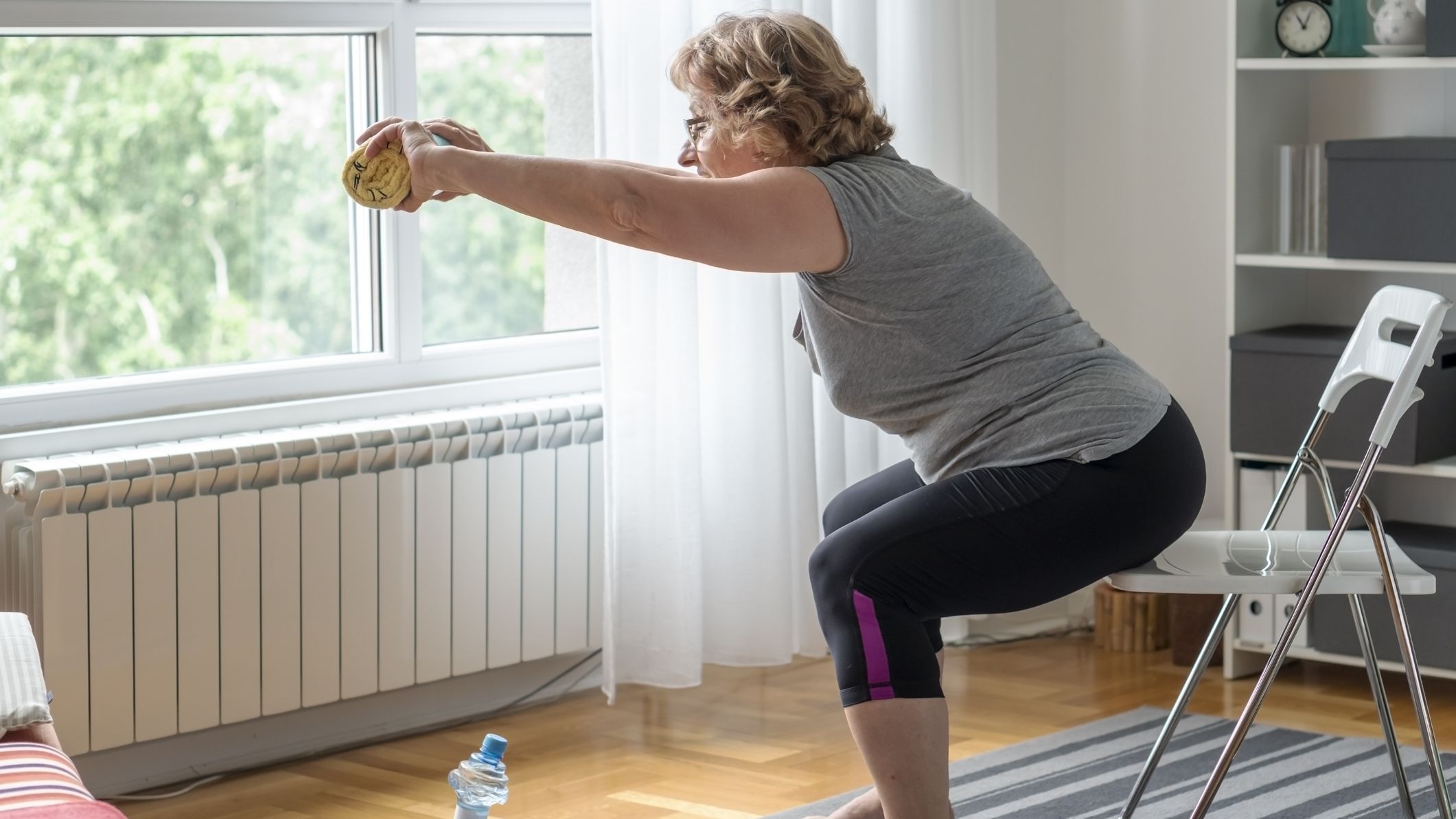
The good news? Strength training can substantially slow this decline, helping older adults maintain mobility and independence well into later life [[17]]. According to the National Institute on Aging (NIA), bodyweight exercises such as pushups and planks are legitimate forms of resistance training that require muscles to contract against gravity — no dumbbells required [[17]].
In this guide, we present 6 evidence-based bodyweight exercises specifically selected for safety and effectiveness after age 55. Each movement targets key arm muscles — biceps, triceps, shoulders, and forearms — while respecting joint health and common age-related limitations.
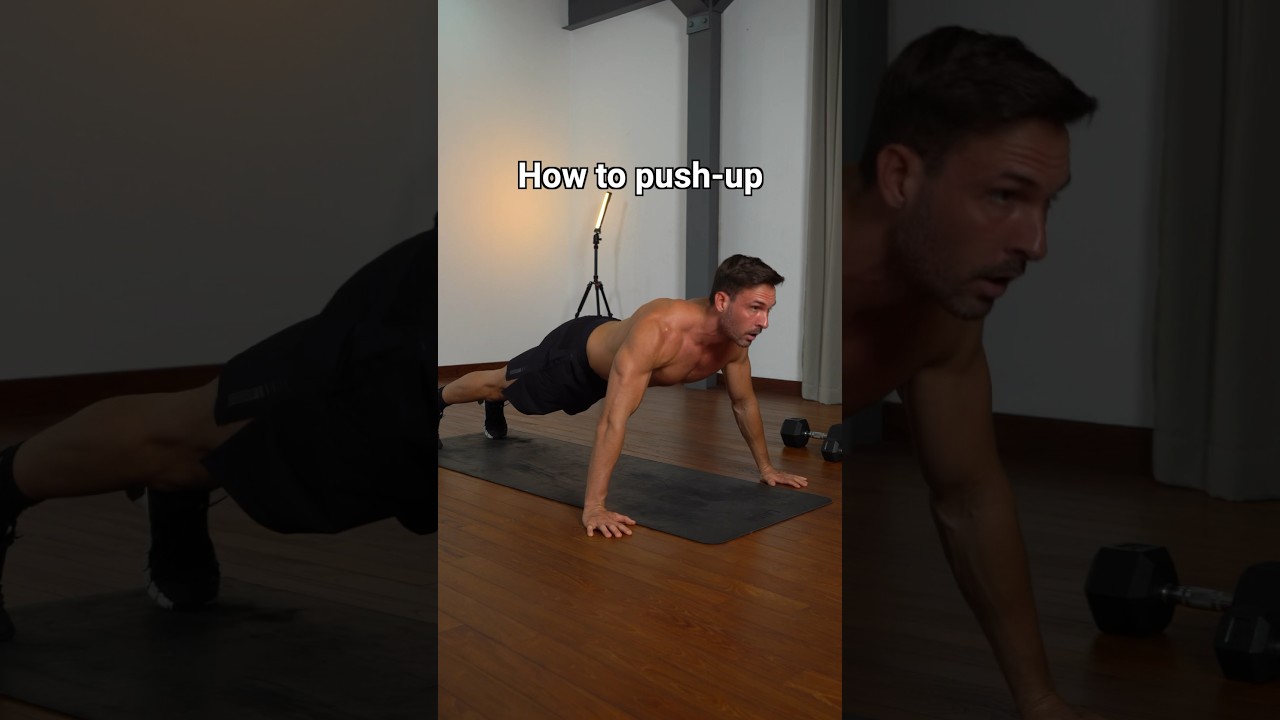
Wall Push-Ups
The wall push-up is the most accessible entry point for building chest, shoulder, and tricep strength without placing excessive strain on the wrists or lower back. It reduces the load to roughly 30–40% of body weight compared to a floor push-up, making it ideal for beginners or those with joint concerns.
How to Do It
- Stand facing a wall, arms extended at shoulder height, palms flat against the surface
- Step feet back about 2–3 feet so your body forms a straight diagonal line
- Bend elbows slowly, bringing your chest toward the wall while keeping your core engaged
- Push back to the starting position with control
- Aim for 2–3 sets of 10–15 repetitions
Muscles Targeted
- Pectoralis major (chest)
- Anterior deltoids (front shoulders)
- Triceps brachii
Why It Works After 55
Wall push-ups allow progressive overload simply by stepping further from the wall. Research confirms that even modified bodyweight resistance exercises can produce meaningful strength gains in older adults when performed consistently [[17]].
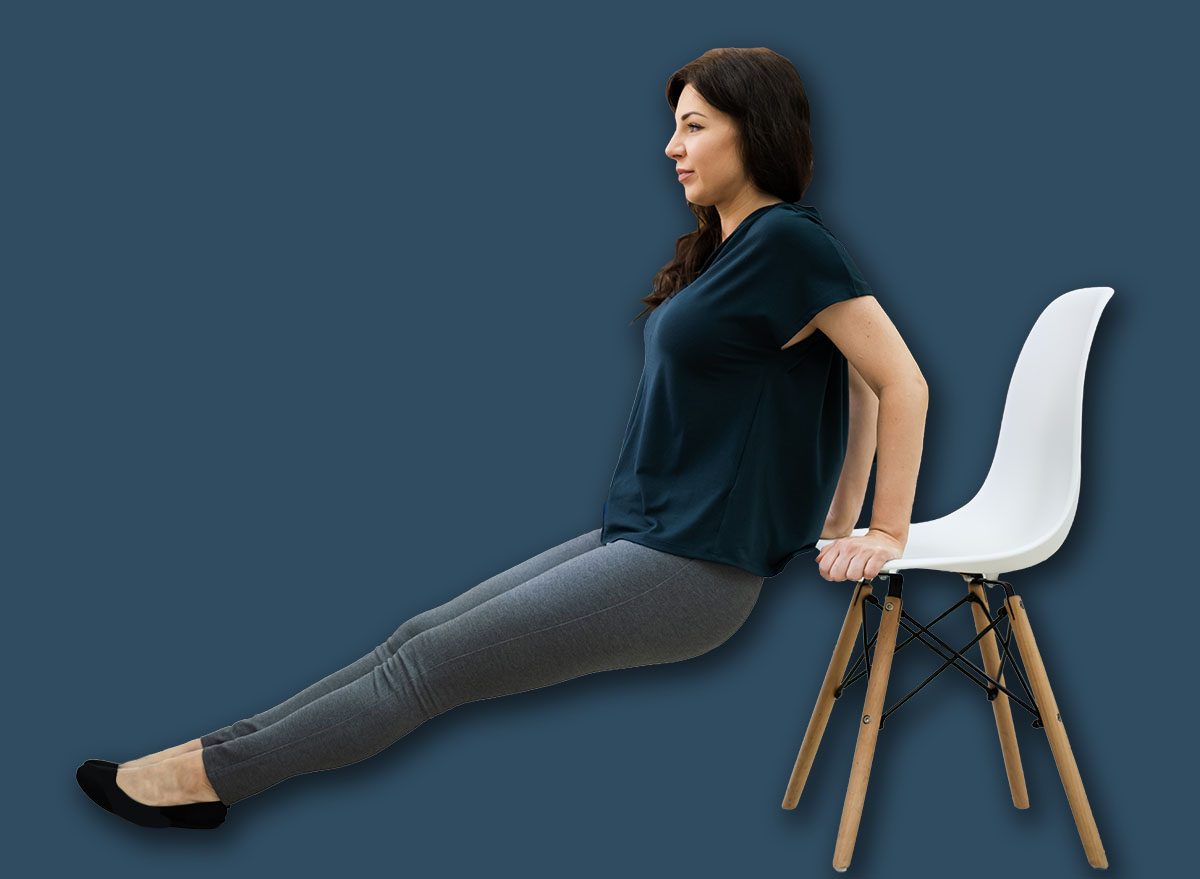
Chair Triceps Dips
Triceps make up roughly two-thirds of upper-arm mass, yet they are often the most neglected muscle group in senior fitness routines. Chair dips isolate this muscle effectively while using a stable surface for safety.
How to Do It
- Sit on the edge of a sturdy, non-rolling chair with hands gripping the seat beside your hips
- Scoot your hips off the chair, supporting your weight with your arms
- Extend legs forward (easier) or keep knees bent at 90° (harder)
- Lower your body by bending elbows to about 90°, keeping them pointed backward
- Press through your palms to return to the starting position
- Complete 2–3 sets of 8–12 repetitions
Muscles Targeted
- Triceps brachii (primary)
- Anterior deltoids
- Pectoralis minor
Safety Note
Always use a chair placed against a wall to prevent sliding. If shoulder discomfort occurs, reduce the range of motion or switch to countertop dips at a higher surface.
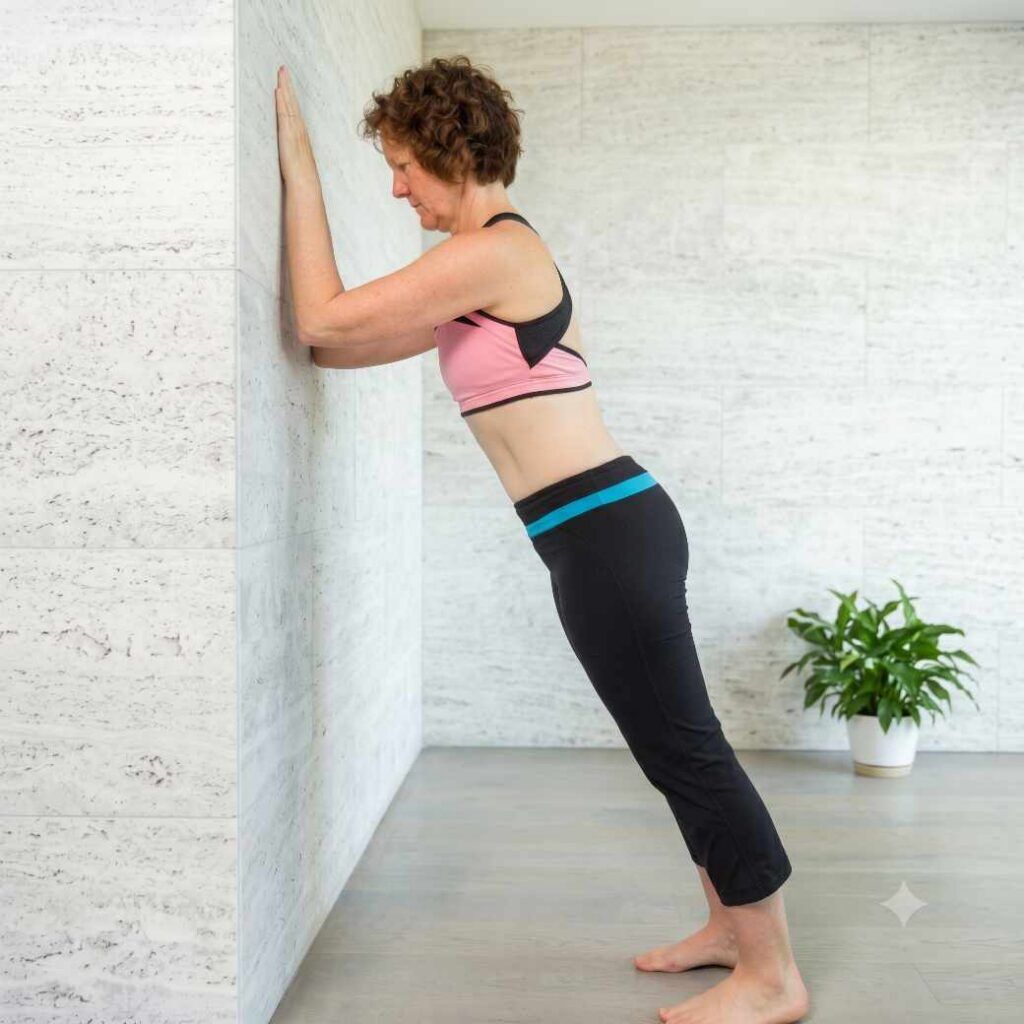
Standing Wall Plank
While traditionally viewed as a core exercise, the plank significantly engages the shoulders, forearms, and upper-back stabilizers — all critical for functional arm strength. The wall variation makes this accessible for those who cannot safely hold a floor plank.
How to Do It
- Place forearms flat against a wall, elbows directly under shoulders
- Step feet back until your body forms a straight line from head to heels
- Engage your core and squeeze your shoulder blades together
- Hold for 20–45 seconds, breathing steadily
- Rest 30 seconds; repeat 3 times
Muscles Targeted
- Deltoids (shoulders)
- Forearm flexors and extensors
- Serratus anterior and rhomboids
- Core stabilizers
Progression
As strength improves, move to an incline plank on a countertop, then eventually to a full floor plank. Studies show that consistent resistance training leads to measurable improvements in functional performance in adults over 60 [[21]].
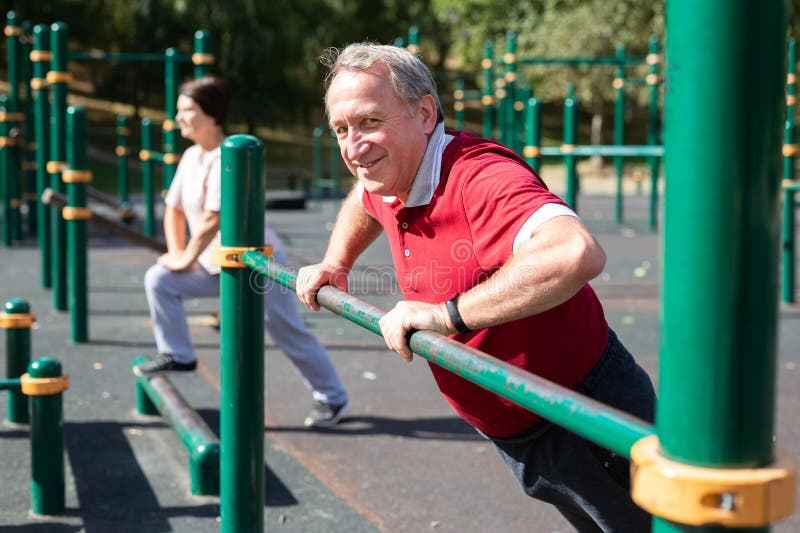
Incline Push-Ups (Countertop or Bench)
The incline push-up bridges the gap between wall push-ups and floor push-ups. By elevating the hands on a kitchen counter, sturdy bench, or low step, you increase resistance while still protecting the shoulders and wrists from excessive load.
How to Do It
- Place hands shoulder-width apart on a stable elevated surface (counter, bench, or step)
- Step feet back so your body forms a straight diagonal line
- Lower your chest toward the surface by bending elbows at a 45° angle from your torso
- Press back up to full arm extension
- Perform 2–3 sets of 8–15 repetitions
Muscles Targeted
- Pectoralis major
- Triceps brachii
- Anterior and medial deltoids
- Serratus anterior
Why Elevation Matters
Each inch of elevation reduces the percentage of body weight borne by the arms by approximately 5%. This allows precise progression: start high (counter), then gradually move lower (bench → step → floor) as strength builds.
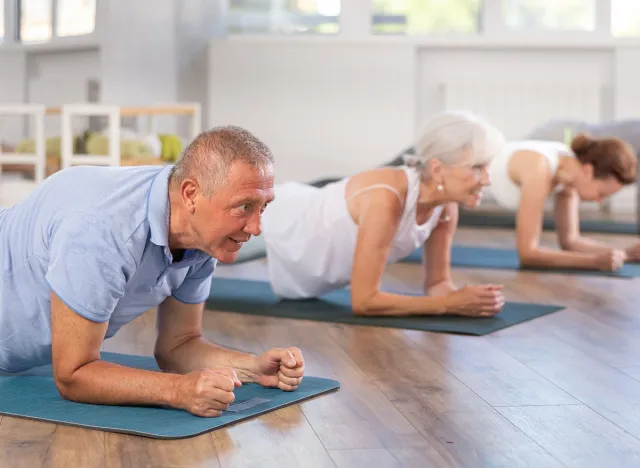
Modified Floor Plank (Knees Down)
For those ready to progress beyond the wall plank, the knee-supported floor plank provides greater resistance while maintaining safety. This position loads the shoulders and arms more intensely than any standing variation.
How to Do It
- Kneel on a yoga mat with forearms on the ground, elbows under shoulders
- Extend legs back onto your knees (not toes), forming a straight line from head to knees
- Tighten your core and glutes to prevent hip sagging
- Hold for 20–40 seconds while breathing normally
- Complete 3 holds with 30-second rests between
Muscles Targeted
- Deltoids (all three heads)
- Triceps
- Forearm stabilizers
- Transverse abdominis and obliques
Research Insight
A 2025 review in Frontiers in Sports and Active Living found that targeted upper-body training can counteract the notable decline in type II muscle fibers in the deltoids of older adults — fibers essential for power and rapid movement [[18]].
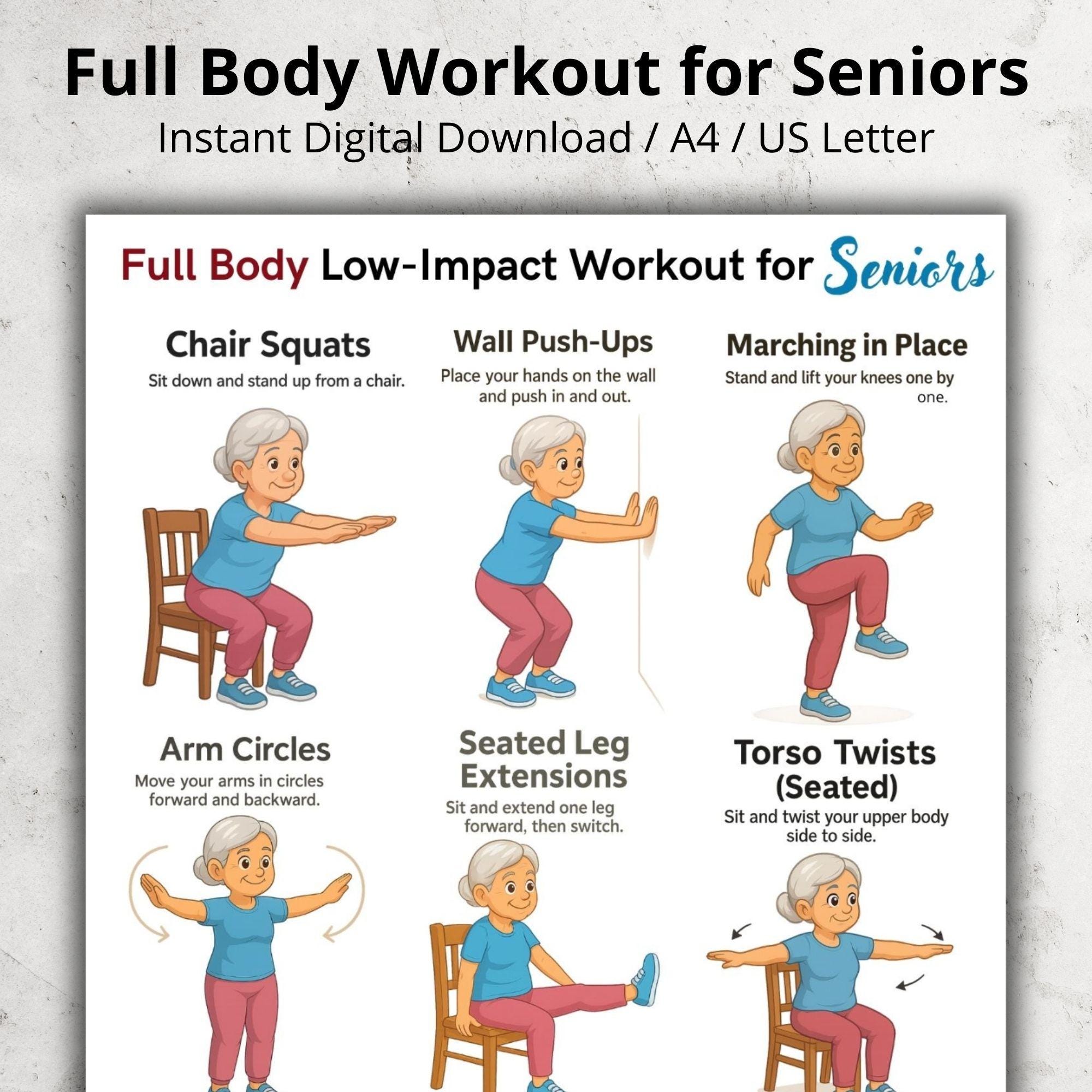
Arm Circles with Isometric Holds
Often dismissed as a simple warm-up, arm circles become a genuine strengthening tool when combined with isometric pauses. This exercise improves shoulder endurance, rotator cuff stability, and grip strength — all vital for daily tasks like carrying bags or reaching overhead.
How to Do It
- Stand with feet shoulder-width apart, arms extended straight out to the sides at shoulder height
- Make small forward circles (about 6–8 inches in diameter) for 20 seconds
- Pause and hold arms stationary at shoulder height for 15 seconds (isometric hold)
- Reverse direction: small backward circles for 20 seconds
- Hold again for 15 seconds
- Repeat the full cycle 3 times
Muscles Targeted
- Medial and posterior deltoids
- Rotator cuff muscles (supraspinatus, infraspinatus)
- Trapezius and rhomboids
- Forearm extensors
Why Isometrics Matter
Isometric holds create tension without joint movement, making them especially safe for individuals with arthritis or shoulder impingement. The NIA notes that resistance training — including isometric work — helps older adults maintain muscle mass and improve mobility [[17]].
🔬 What the Science Says
Sarcopenia is reversible — to a degree. NIA-supported researchers have studied strength training in older adults for over 40 years and consistently find that regular resistance exercise maintains muscle mass, improves mobility, and increases healthy years of life [[17]].
A 2025 narrative review published in PMC confirmed that strength training produces convincing benefits in both healthy and diseased older adults, with intensity being a key factor for improvement in maximal strength and rate of force development [[15]].
The CDC’s Growing Stronger program recommends that older adults incorporate strength training 1–2 times per week, noting that record-keeping and consistent practice are among the strongest predictors of long-term adherence [[16]].
Importantly, research from UCLA Health confirms that strength training may also reduce the risk of osteoporosis, lower blood pressure, and decrease mortality risk in older populations [[17]][[21]].
️ Safety Guidelines Before You Begin
- Consult your physician before starting any new exercise program, especially if you have cardiovascular conditions, osteoporosis, or recent surgery
- Warm up for 5 minutes with gentle arm swings, shoulder rolls, and marching in place before beginning
- Never push through sharp pain — muscle fatigue is normal; joint pain is not
- Use stable furniture only — test chairs and counters for stability before relying on them for support
- Breathe continuously — never hold your breath during exertion (this can spike blood pressure)
- Start with fewer repetitions and gradually increase over 4–6 weeks rather than pushing to failure immediately
- Stay hydrated and exercise in a cool, well-ventilated space
📅 Suggested Weekly Routine
| Day | Activity | Duration |
|---|---|---|
| Monday | Exercises 1, 2, 3 + 5-min warm-up | 20–25 min |
| Tuesday | Light walk or stretching (active recovery) | 20–30 min |
| Wednesday | Exercises 4, 5, 6 + 5-min warm-up | 20–25 min |
| Thursday | Rest or gentle yoga | 15–20 min |
| Friday | All 6 exercises (full circuit) | 30–35 min |
| Weekend | Active leisure: gardening, swimming, walking | As desired |
💪 Start Building Strength Today
You don’t need a gym membership or expensive equipment to protect your independence. These six bodyweight exercises are scientifically supported, safe, and effective for adults over 55.
📚 Scientific References
- National Institute on Aging. How Can Strength Training Build Healthier Bodies as We Age? NIH/NIA, June 30, 2022. nia.nih.gov
- Tøien T, et al. Heavy Strength Training in Older Adults. PMC, 2025. pmc.ncbi.nlm.nih.gov
- CDC. Growing Stronger – Strength Training for Older Adults. Centers for Disease Control and Prevention. cdc.gov
- Lee-Confer J, et al. Strength in Arms: Empowering Older Adults Against the Risk of Functional Decline. Frontiers in Sports and Active Living, 2024. frontiersin.org
- Mayo Clinic. The Many Benefits of Resistance Training as You Age. MC Press, September 27, 2024. mcpress.mayoclinic.org
- Venturelli M, et al. Positive Effects of Physical Training in Activity of Daily Living in Older Adults. Aging & Mental Health, 2010. tandfonline.com
- Hurst C, et al. Resistance Exercise as a Treatment for Sarcopenia. Age and Ageing, 2022. academic.oup.com

